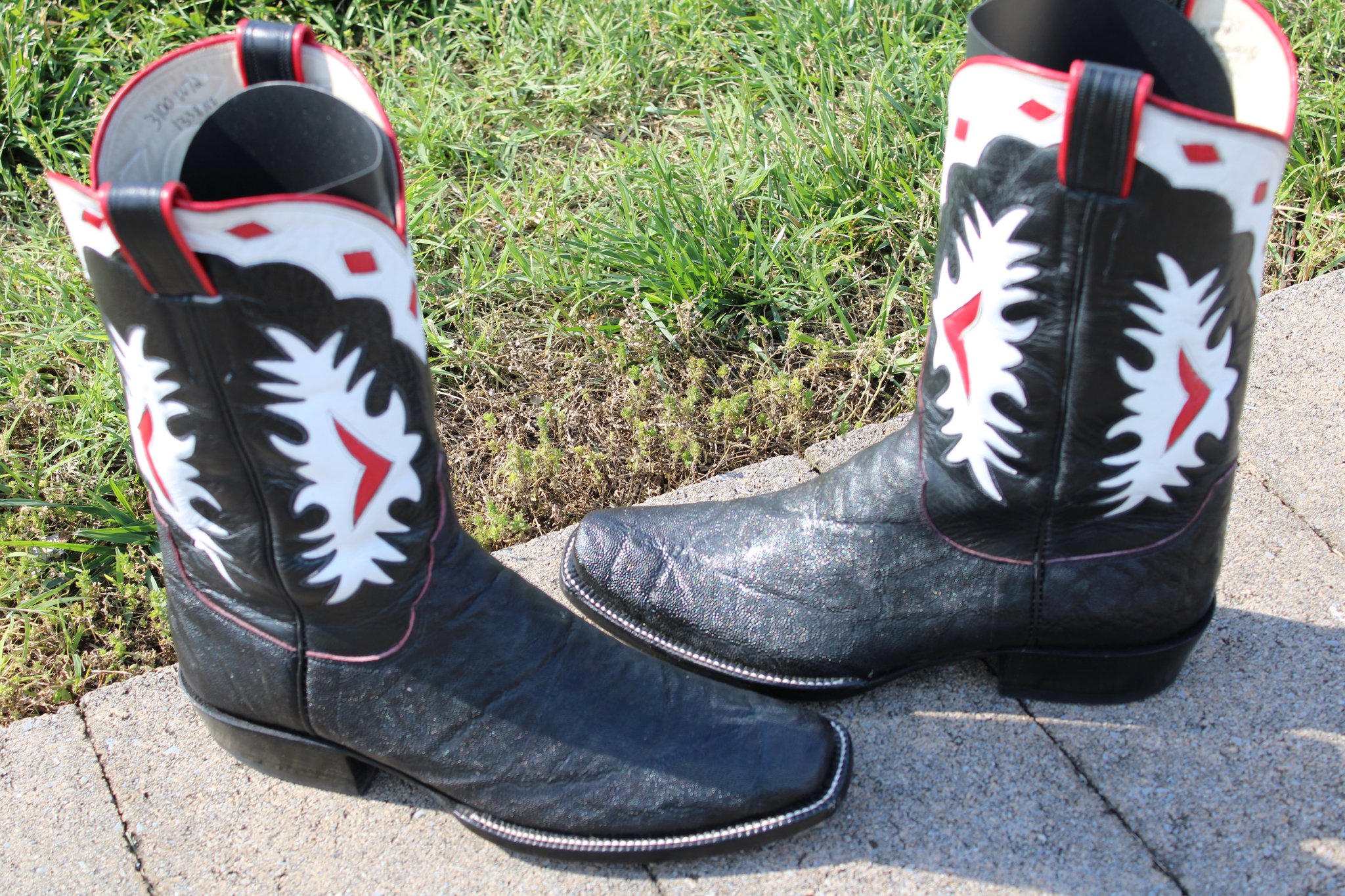
Martin Luther Leddy (1896-1957) founded one of the great Texas custom boot institutions. The collector value of a Leddy pair is not only the name on the label; it is the ledger system, the fit record, the family shop continuity, and the way a working boot could become a lifetime object.
Biography
Martin Luther Leddy was born on April 1, 1896. In 1918, after leaving his family's cotton farm, he began repairing boots and saddles in Brady, Texas. Four years later he purchased the shop and built it into his own operation. That origin matters: Leddy was not starting from catalog styling. He was starting from repair, fit, ranch work, and the practical reality of feet that had to stay comfortable through long days.
Leddy's great contribution was disciplined memory. The shop recorded customer feet in large leather-bound ledgers: tracings, arch notes, instep measurements, and boot specifications. The system turned a pair of boots into a retrievable record. The official company history says each custom handmade boot owner has a page in those books, and a hand-written code inside each boot top lets the shop trace a pair back to its original owner.
By 1936 the Brady shop had outgrown its first home, and Leddy moved the operation to San Angelo. In 1941, he opened the Fort Worth Stockyards location. That two-city identity is still central to the story: San Angelo is the craft and production anchor, while Fort Worth is the public-facing Western institution where generations have been measured, fitted, and folded into the ledgers.
In the early 1950s, M.L.'s sons Dale and Hollis and his son-in-law Jim Franklin purchased the business from the founders. M.L. died on July 20, 1957, but the operation remained family-owned. By 1986 his grandson Wilson Franklin continued the family line, and fourth-generation family members later worked in the business.
Construction Character
The best Leddy research is physical. Texas Co-op Power's shop reporting gives a useful construction map: custom Leddy work begins with the last, which is built out for individual foot differences. The story credits original Leddy bootmaker Arch Baird with the basic lasts behind the shop's reputation for arch support.
The same reporting describes details that collectors should look for: a distinctive narrow triple-scallop tongue, a single bug-and-wrinkle on the vamp, lemonwood pegs in the arch, leather heels, soft leather linings, and finishing work that keeps dust away from polishing and sole sanding. Those details do not make every pair easy to date, but they give the collector a better checklist than simply saying "custom handmade."
The Ledger Is The Provenance
For most custom makers, provenance is external: receipts, family stories, photos, and repairs. With Leddy, provenance can be partly internal. The code inside the boot top matters because it can correspond to a ledger page. That does not automatically prove condition, originality, or exact age, but it can anchor the pair to a customer record in a way few bootmakers can match.
This is why the first photo of any vintage Leddy pair should not be the exotic vamp. It should be the interior: label, code, size marks, owner marks, and any handwriting. The glamour photo comes later. The evidence photo comes first.
Why He Matters To Collectors
- Leddy created a durable Texas custom system: measured fit, written records, family continuity, and repeatable construction.
- The shop bridged working ranch boots and high-end Western retail without losing the custom fitting ritual.
- The Fort Worth Stockyards store made Leddy a public landmark, but San Angelo remains essential to the handmade production story.
- Vintage Leddy examples can be plain calfskin workhorses or serious exotic collectibles; both belong in the same story if they carry the shop record.
- A Leddy pair can often be researched more deeply than many custom boots because the interior code may connect back to the ledgers.
Identification Direction
For each Leddy pair, photograph the interior code, label, shaft tops, pull straps, vamp and counter leather, bug-and-wrinkle, toe shape, heel profile, sole, pegging, and any repairs. Record whether the pair appears custom, ready-made, rebuilt, relasted, or resoled. If the pair is exotic, capture enough close-up texture to identify the skin independently from the label.
For CBDB, the right model is both personal and institutional: M.L. Leddy is the founder and maker page, while M.L. Leddy's should eventually have a company page covering stores, family ownership, ledgers, saddles, Western wear, and modern production eras.